
How to Cycle a Fish Tank: The Nitrogen Cycle in Plain English
TankAndFin is reader-supported. If you buy through our links we may earn a commission at no extra cost to you. As an Amazon Associate we earn from qualifying purchases. Disclosure.
Understand this before buying fish. Kits sometimes say to wait a day; the science says weeks. Here's the process, from University of Florida extension fact sheets.
The nitrogen cycle
- Ammonia. Fish release it constantly. UF: "In healthy ponds and tanks, ammonia levels should always be zero."
- Nitrite. Ammonia-oxidizing bacteria (including Nitrosomonas and Nitrosospira) convert ammonia to nitrite, which UF says is toxic "at levels as low as 0.10 mg/L."
- Nitrate. Nitrite-oxidizing bacteria (including Nitrospira and Nitrobacter) convert it to "the much less toxic nitrate." Water changes remove it.
How long?
UF: "A new biofilter requires six to eight weeks to build up sufficient bacteria." A second UF fact sheet says "three to eight weeks, or longer," and that "cooler water temperatures will slow down the growth." Aqueon's own water-quality article agrees: running a tank for 24 to 48 hours "is not cycling," even though Aqueon's kit setup guide says to "wait 24 hours before adding fish."
Ways to cycle
UF's recirculating-system fact sheet (written for aquaculture systems) lists options home aquarists also use:
- Fishless, with ammonia: dosing "liquid ammonia (with no additives) at low levels (2–3 mg/L total ammonia nitrogen)" to feed the bacteria before any fish go in.
- Bottled bacteria: "active commercially available biofilter bacterial cultures from reputable sources." See Quick Start vs Stability.
- Seeding: "biofilter media or water from an established system." Aqueon says a little gravel or filter media from a healthy tank "will help speed up the cycling process."
Step by step
- Set up the tank, filter and heater, and treat the water with a conditioner.
- Add an ammonia source (or seeded media, or bottled bacteria).
- Test ammonia and nitrite frequently. UF: measure "to determine when the ammonia and nitrite levels have peaked and then dropped."
- When ammonia and nitrite both read zero and nitrate is showing, do a partial water change.
- Add a few fish at a time. Aqueon: "Stock your new aquarium gradually, feed sparingly and test water regularly."
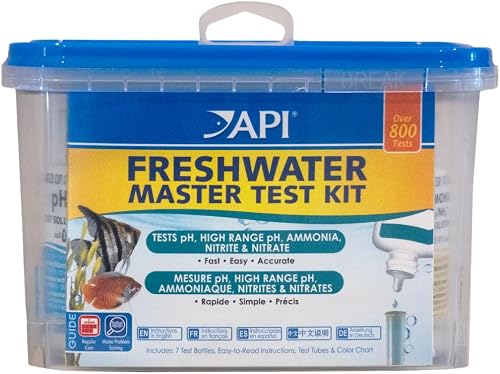
API Freshwater Master Test Kit
- Tests pH, high-range pH, ammonia, nitrite and nitrate, per the listing
- 7 test solutions, color card and 4 tubes
- Listed as 800 tests; freshwater only
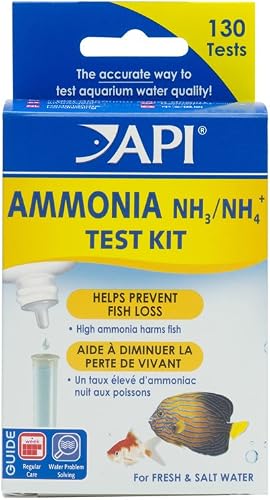
API Ammonia Test Kit (130 tests)
- Reads ammonia 0-8 ppm (mg/L), per the listing
- Fresh or saltwater
- Listing suggests several tests a week when starting a new tank
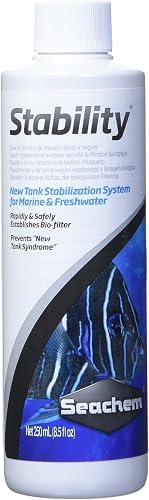
Seachem Stability (250 mL)
- Bacteria blend to establish the biofilter, per the listing
- Day 1: 5 mL per 10 gallons; then 5 mL per 20 gallons daily for 7 days (listing)
- Turn off UV or ozone while dosing
Things that slow or stall the cycle
- Low alkalinity: UF says nitrifying bacteria don't work well below 20 mg/L total alkalinity.
- Some medications: UF warns antibiotics can harm the biofilter.
- Untreated tap water: the EPA says chlorine and chloramine can prevent beneficial bacteria from growing.
If you already have fish in a new tank
UF's advice for high ammonia: "reduce or stop feeding" and "a 25% to 50% water change will help remove some ammonia." Test daily until things settle. The CDC also suggests asking your veterinarian about cycling.
FAQ
How long?
Six to eight weeks, per UF.
What is the nitrogen cycle?
Ammonia to nitrite to nitrate, via bacteria.
How do I know it's done?
Ammonia and nitrite peak, then read zero.